Blog · Behind the data · September 28, 2026
Your kid is not competing with their classmates for UC San Diego seats

A chart has been circulating among California parents. It says that if your kid goes to a high school where a lot of students apply to UC San Diego, they are effectively competing with their classmates for a fixed number of seats. Same school, same year, a limited pool. Worse odds because of who they sit next to in homeroom.
It is a frightening idea, and it has the shape of something true. So we checked it against the University of California's own admissions data — 748 California public high schools, Fall 2025.
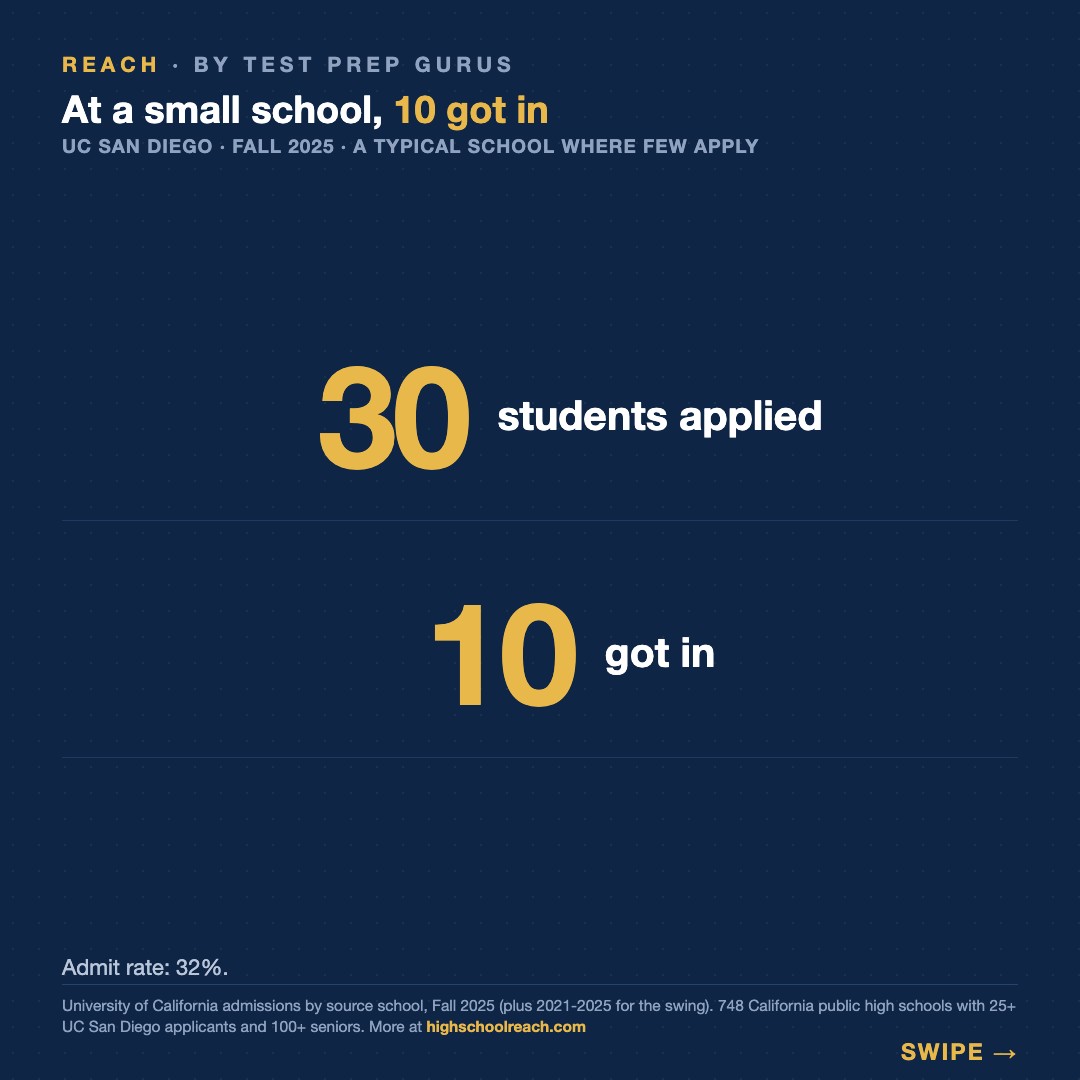
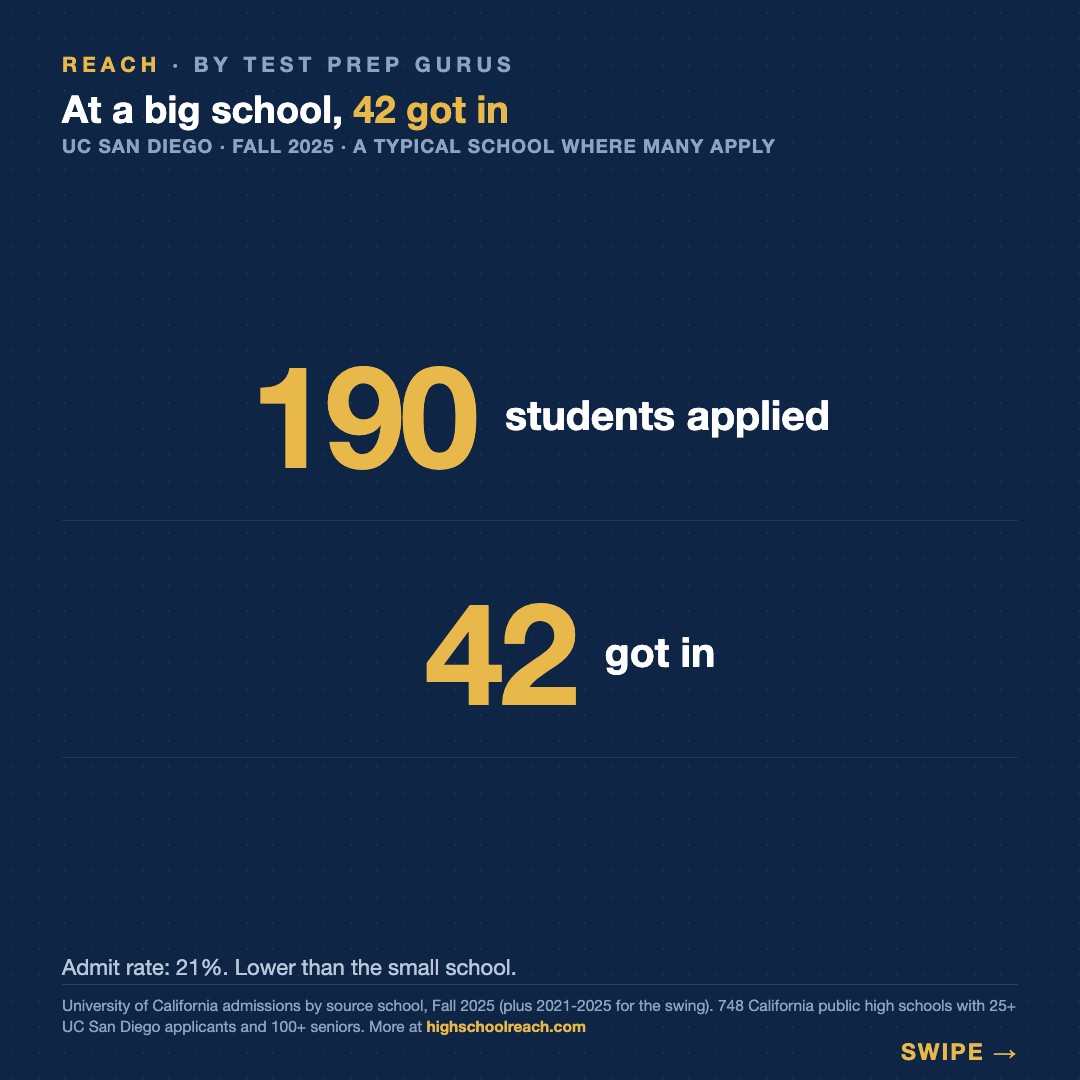
The pattern is real. At schools sending about 30 applicants to UC San Diego, the admit rate is about 32%. At schools sending about 190, it is about 21%. The rate really does fall as the applicant count climbs.
The explanation is wrong.
Here is the number the chart leaves out. Across that same range, the count of students actually admitted goes up — from about 10 to about 42. The rate falls and the number of kids who get in more than quadruples.
A cap flattens. This climbs.
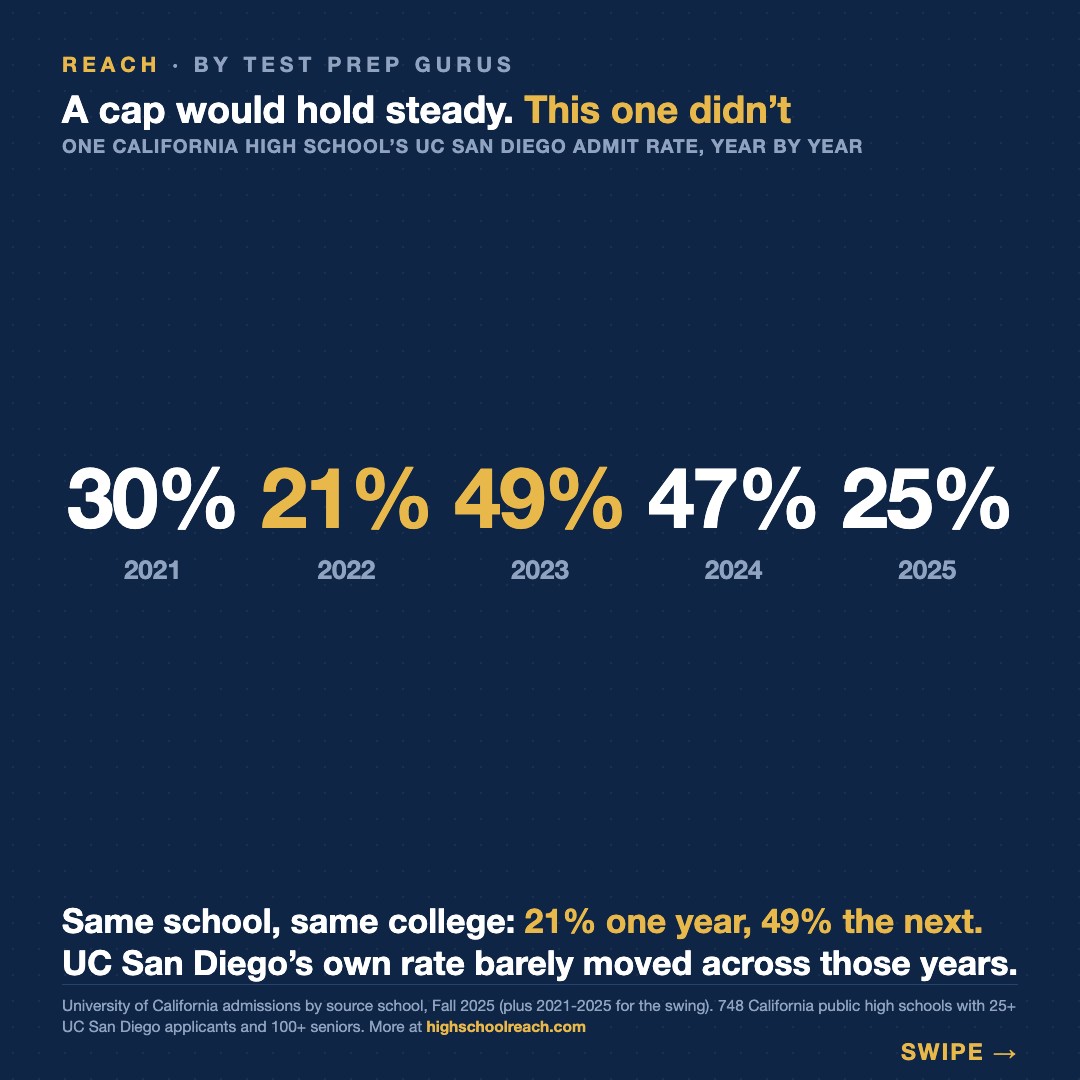
There is a second tell, and it is the one that settles the question. A school's own admit rate moves every single year. Across 165 California high schools with five straight years of data, the median school swings 13.9 points between its best year and its worst. Thirty percent of them swing more than 20 points. One school went 21%, then 49%, then back to 25% — same school, same college, three years.
Meanwhile UC San Diego's own overall admit rate barely moved across those same years.
Sit with what a quota would actually look like. Individual schools would be steady — the same handful of seats handed out every year — and the system-wide number would be the thing that moved. What the data shows is the exact reverse. The system is steady. The schools swing wildly. That is not the fingerprint of a limit. That is the fingerprint of who happened to apply.
Which is what is really going on. At a school where 30 students apply, mostly the strongest ones do — the kids with the grades, the rigor, and a counselor telling them it is worth the application fee. At a school where 200 apply, the pool runs much deeper. More students take the shot, including plenty who are a long way from admissible. The rate falls precisely because more kids tried.
So a lower admit rate at a big high school is not your child being crowded out by classmates. More students from that school go to UC San Diego, not fewer.
If you want to know what your own school's numbers look like — how many students it sends, and where — look it up. The rate is a story about who applied. It was never a limit on who can get in.