Blog · College admissions · September 23, 2026
Test-optional is not test-blind, and the difference decides whether your kid should prep
Her daughter was done with the SAT.
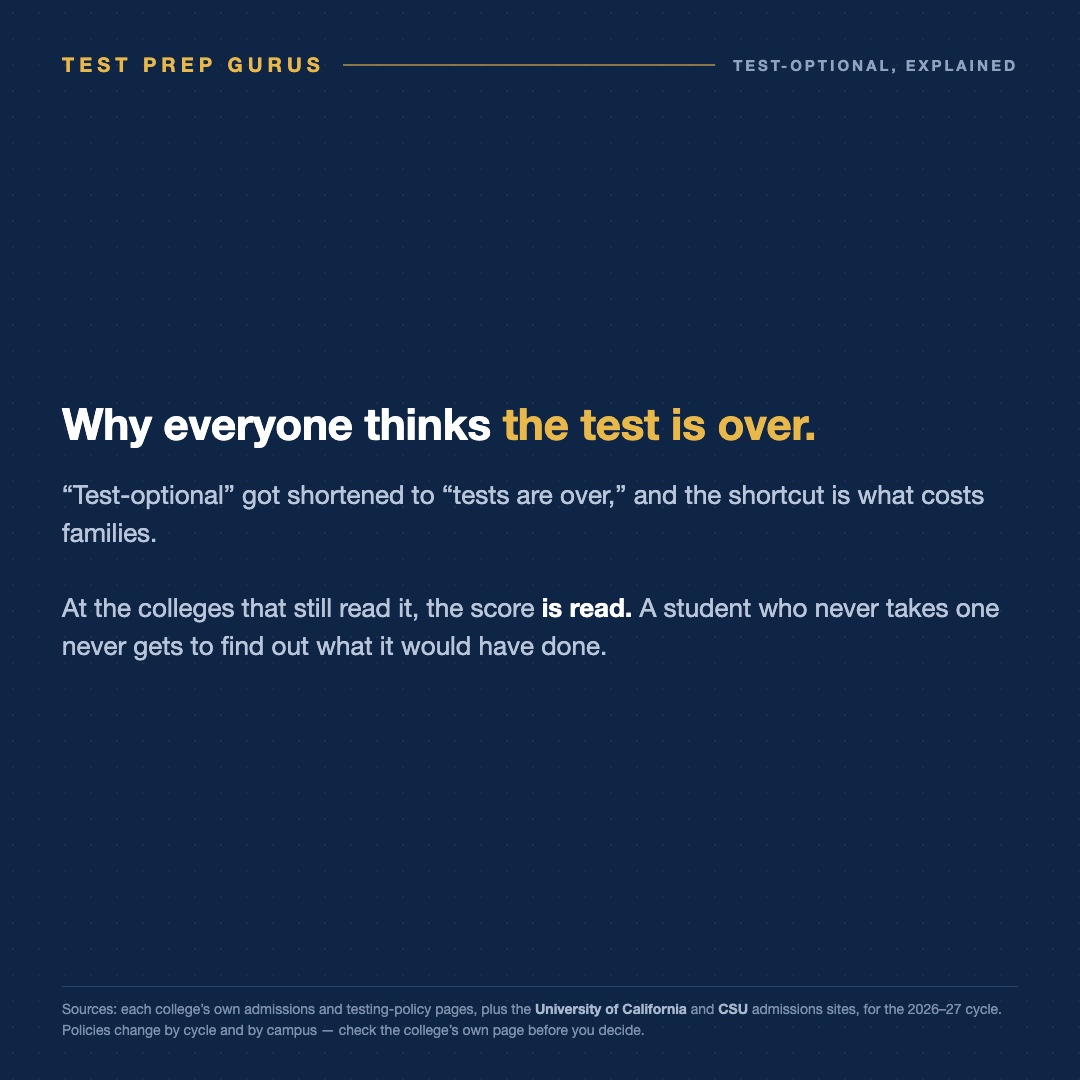
That is how a mom put it to me this week, and she had heard the reason often enough to believe it: colleges do not need the test anymore.
Part of that is true. Which part depends on her daughter's list, so here is how I sort it for families.
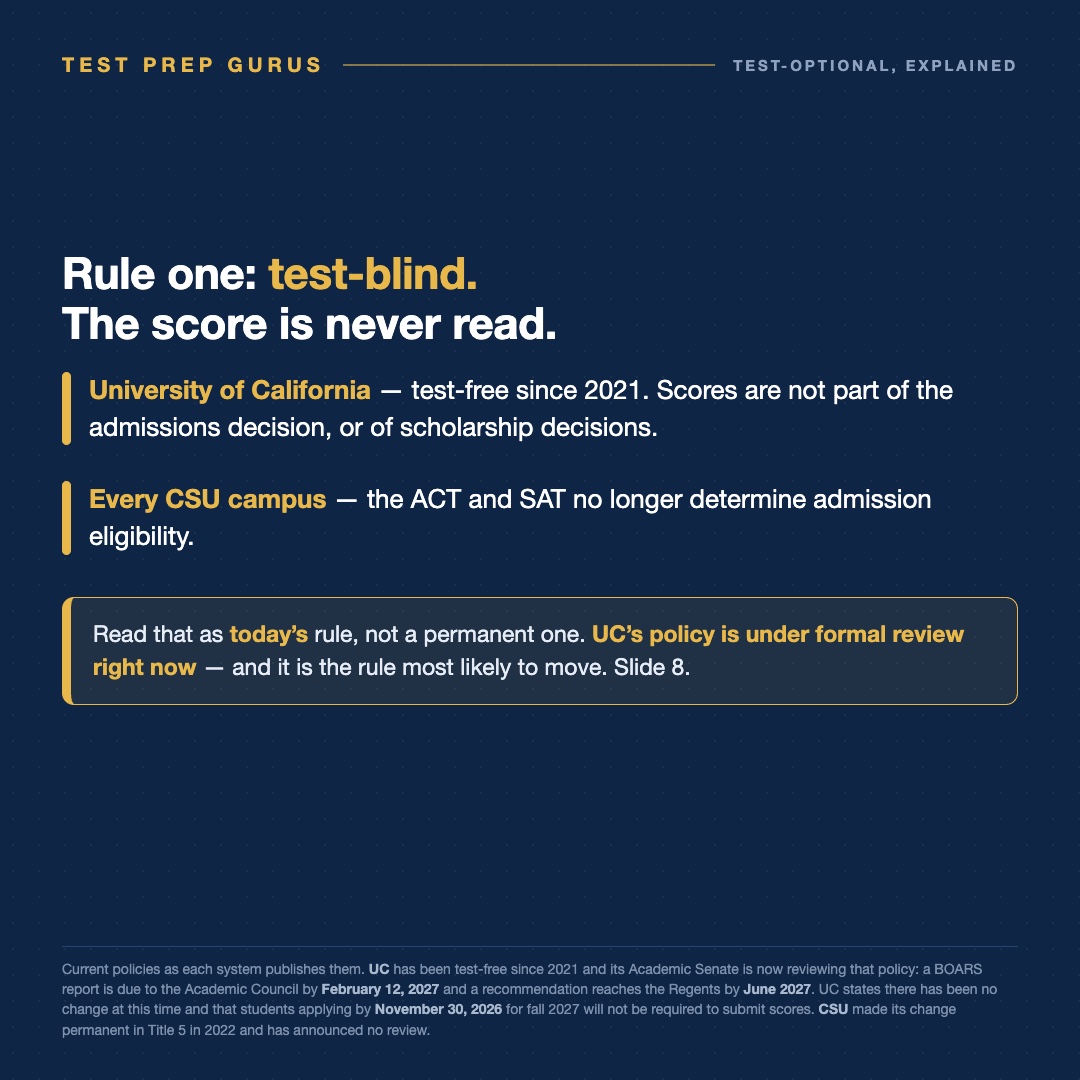
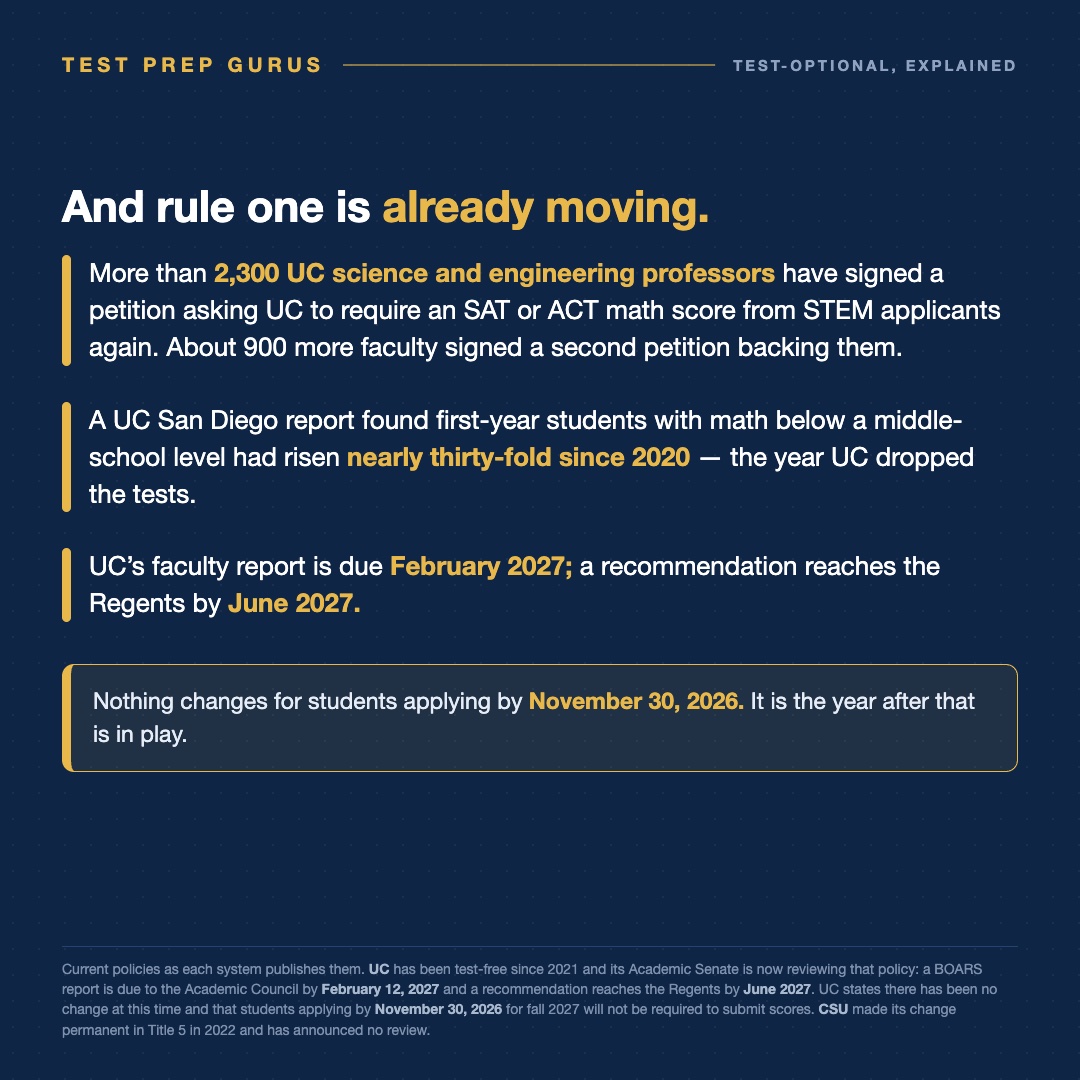
Test-blind means the score is never read. Not in admissions, not in scholarship decisions, not as a tiebreaker. That is the entire University of California system, and it is every CSU campus. A California student applying only in-state is genuinely done.
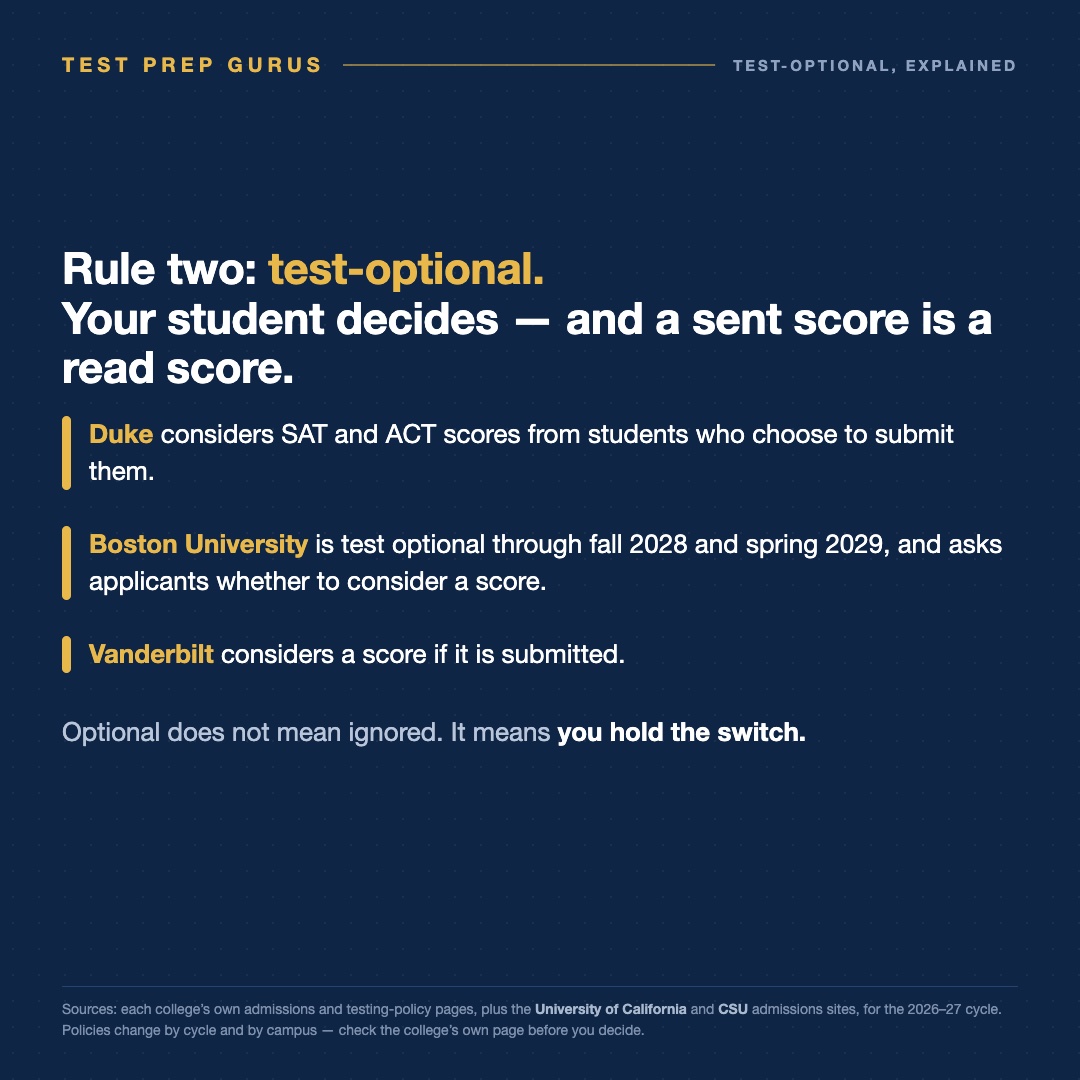
Test-optional means your student decides, and the college reads what arrives. Duke is test-optional for the 2026-27 cycle and says it will continue to consider SAT and ACT scores as part of the application of students who choose to submit them. Boston University is test-optional through fall 2028 and spring 2029, and applicants tell BU whether they want their scores considered.
Read that carefully, because the word optional does a lot of quiet work. The college is not indifferent to the score. It is indifferent to whether you send one.
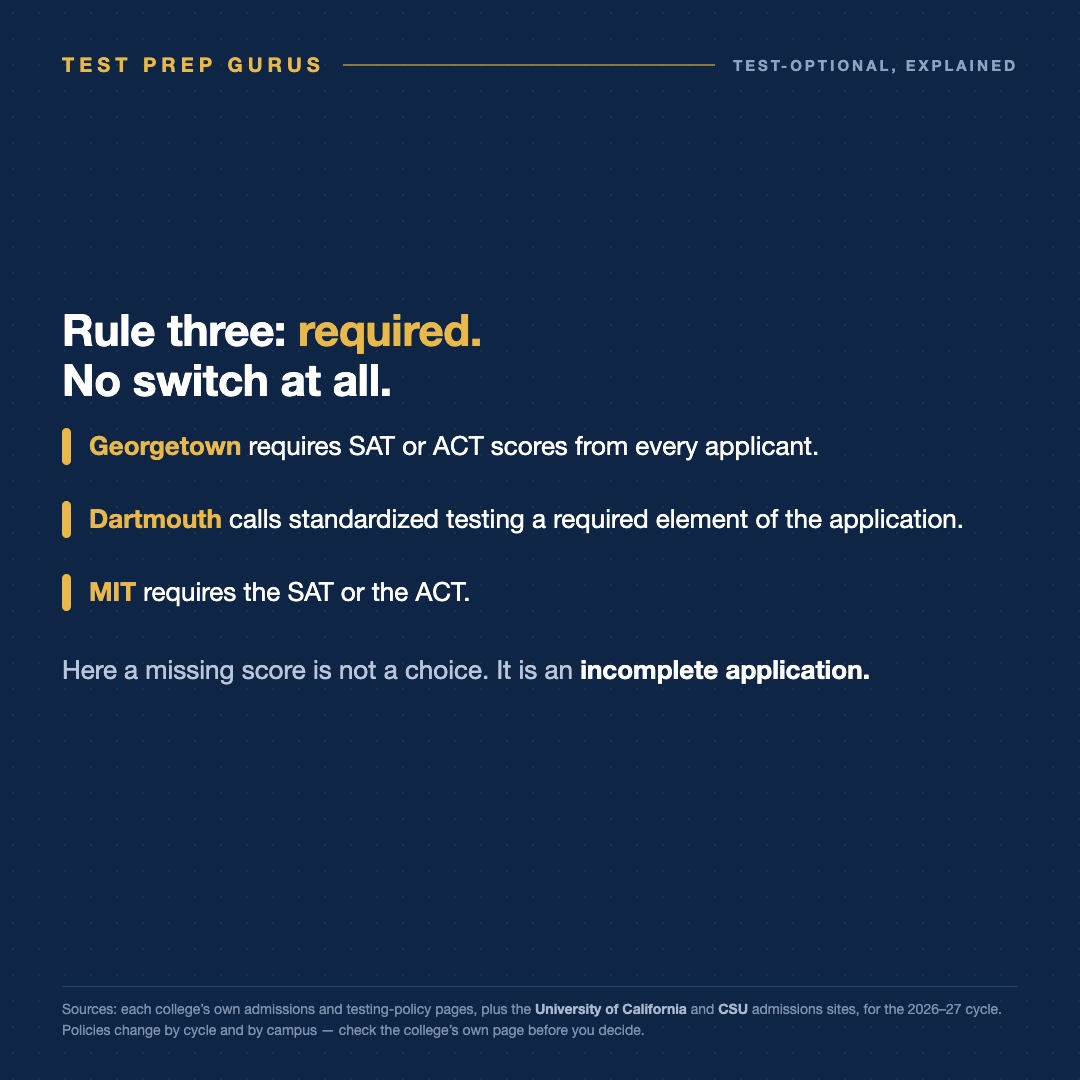
Then there is a third group that asks outright. Georgetown requires submission of SAT or ACT scores as part of its holistic application review. Dartmouth calls standardized testing a required element of its undergraduate application.
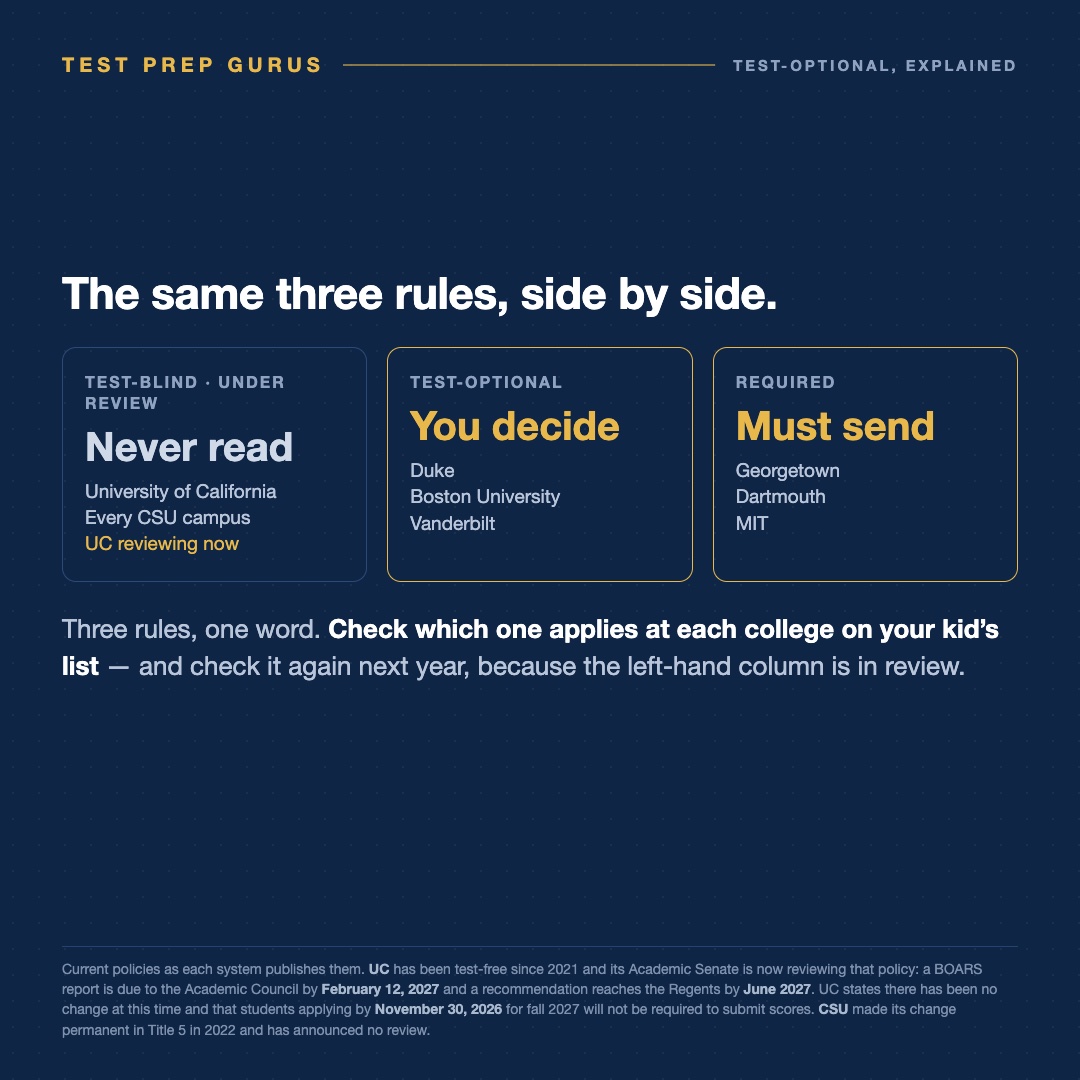
So I told her what I will tell you. The score is unread at some colleges, optional at others, and mandatory at the rest. Where it is read, it moves things. And a student who skips the test never finds out which of those three buckets would have mattered.
The plan for her daughter is the same one I would give anyone in this spot: six to twelve weeks of real SAT or ACT prep, aimed at the colleges on her list that will actually read it. Build the list first. Then decide.
Every college's current testing policy is on its profile at highschoolreach.com.