No UC admissions data on file for Dewolf Continuation High.
This school doesn't appear in UCOP's source-school records (it may send few or no applicants to UC). Its enrollment trend and similar-school comparison are still below.
Compare with peers
Most similar nearby schools
Sierra Charter School → West Park Charter Academy → Central Unified Alternative/Opportunity → Design Science Middle College High School → Ambassador Phillip V. Sanchez Ii Public Charter → Compare all similar →At a glance
- Dual-enrollment program (college credit while in HS)
- AP rigor: Bottom 18% of US high schools
- 4-yr grad rate: 62% in 2019 (Bottom 12% of US high schools by 4-yr grad rate)
Composed from federal CRDC offerings, EDFacts graduation data, and other public data. Full breakdowns below.
How Dewolf Continuation High compares for families
What families should know about Dewolf Continuation High.
- ▸ vs Similar SchoolsThe closest comparables nearby: Sierra Charter School, West Park Charter Academy, Central Unified Alternative/Opportunity and 2 more. See the sidebar to compare side-by-side.
For Parents
Get alerts when Dewolf Continuation High's numbers change
New admissions results, enrollment shifts, test scores — a few alerts a year, no spam. Your email also saves your list across devices.
Objective, government-grade data — no school pays us for placement.
California College-Going Rate
38.3% of the 2022-23 graduating class enrolled in college within a year.
The share of 2022-23 graduates who enrolled at a college anywhere in the U.S. within 12 months, per the National Student Clearinghouse match the California Department of Education publishes.
Give the same class four more months and 44.9% had enrolled — CDE publishes a 16-month window alongside the 12-month one, 48 students.
Up 20.8 points from the 2021-22 class (17.5%).
Where the 2022-23 class enrolled
In California — 41 students (38.3%)
Out of state — 0 students (0.0%)
CDE puts each graduate in one bucket only — whichever kind of college they were enrolled in longest — so these add up to the rate above. That is a different count from the UC Reach Score on this page, which counts a student at every UC campus that admitted them.
Source: California Department of Education, College-Going Rate (DataQuest) ↗, cohort 2022-23, posted 17-Sep-2025. Data file: cgr12mo23.txt ↗ (and the 16-month file ↗). CDE builds the rate by matching California high school completers to National Student Clearinghouse enrollment records; we publish CDE’s aggregates and hold no student-level data.
SAT / ACT participation
CRDC federal data · 2020-21Source: federal Civil Rights Data Collection (CRDC 2020-21). Volume — not score — is what's reported here. A higher count means more students at this school are entering the college admissions pipeline. Note: 2020-21 was COVID-disrupted; some districts (especially those that stayed remote longer) report unusually low or zero takers.
4-year graduation rate · federal EDFacts
What % of students graduate on time?
Bottom 12% of US high schools by 4-yr grad rate
Source: federal EDFacts ACGR (Adjusted Cohort Graduation Rate), 2019 vintage via Urban Institute. EDFacts publishes a range (low-high) to preserve privacy on small cohorts; we display the midpoint.
Federal Title I context
High-poverty school
Title I Schoolwide eligible
≥75% of students qualify for free/reduced lunch. These schools qualify for the highest tier of federal Title I funding and typically receive extra wraparound services. Academic outcomes vary widely — check the state assessment + grad-rate tiles.
Source: NCES Common Core of Data, free/reduced-price lunch eligibility. The actual Title I designation is a district decision and may differ from eligibility — but the federal eligibility math is what we show here. We don't claim to assert whether the district formally chose to enroll this school in Title I.
College readiness
Getting ready for college
These come from the state and federal files, not from UC — so they are here whether or not Dewolf Continuation High has a UC admissions record.
SBAC academic outcomes — grade 11, 2025
Share of grade-11 students meeting or exceeding the California standard on Smarter Balanced ELA and Math. This is the academic-readiness signal that pairs with UC Reach (post-grad outcomes), stability (retention), and absenteeism (engagement). Note: statewide median Math is only ~20% — a school at 20% isn't an outlier; one at 45%+ genuinely is.
Source: California Assessment of Student Performance and Progress (CAASPP) Smarter Balanced research files. Benchmarks limited to non-virtual public & charter HS with ≥30 tested students.
Student composition — 2025-26
HS grades 9–12 racial/ethnic composition and program subgroups, from CDE Census Day Enrollment. Two-year shift shown when ≥1 pt — surfaces how the community served has changed since 2023-24.
Race / ethnicity
Program subgroups
Source: California Department of Education, Census Day Enrollment 2025-26 (HS grades 9–12). Δ shown when shift is ≥1 pt since 2023-24. Categories below 0.5% omitted.
Chronic absenteeism — 2024-25
Share of students missing 10% or more of expected attendance — the leading indicator that often precedes the demand decline shown above. Families disengaging tend to raise absenteeism first, then formally leave. Basis: grades 9–12.
Absenteeism is down 23.9 pp since 2016-17. Engagement improving — a positive trajectory worth understanding and reinforcing.
Source: California Department of Education, Chronic Absenteeism 2024-25. Benchmarks limited to non-virtual public & charter HS with ≥100 eligible students. CDE didn't publish a usable 2019-20 file (COVID).
Enrollment trend & projection
If this trend holds (+1.2%/yr, Total enrollment)
At per-pupil funding of $ / student:
| Horizon | Projected Total enrollment | Change | Funding impact / yr |
|---|---|---|---|
| 1 yr (2027) | ~196 | +2 | $0 |
| 3 yr (2029) | ~201 | +7 | $0 |
| 5 yr (2031) | ~206 | +12 | $0 |
Straight-line extrapolation of the recent annual rate — a what-if, not a forecast of intent. Default = California's LCFF base grant for grades 9–12 ($12,423/ADA). Edit the figure to match your school.
How does Dewolf Continuation High really compare on getting kids to college?
Unlock a head-to-head snapshot of Dewolf Continuation High against its 10 most similar nearby schools — matched on size, location, type. See exactly where it stands on the college pipeline.
Your similar-school group includes
Sierra Charter School · West Park Charter Academy · Central Unified Alternative/Opportunity · Design Science Middle College High School · Ambassador Phillip V. Sanchez Ii Public Charter · Gateway High (continuation) · +4 more
Enrollment stability & demand — 2024-25
Two complementary signals: retention (do students stay once enrolled?) and demand (are families choosing the school?). Read against the Fresno County baseline — the demographic tide is moving every CA HS, so a school's gap vs. county is the actionable signal.
Enrollment growth is beating Fresno County (+83.8% vs. +6.7%), but 192 of 289 students didn't maintain continuous enrollment. Why are families leaving once enrolled? Chronic absenteeism is also at 55.2% (up -23.9 pts from 2016-17) — engagement and demand are both signaling decline.
192 of 289 students who enrolled at Dewolf Continuation High this year didn't maintain continuous enrollment (66.4% non-stability). Mid-year transfers, dropouts, and other exits are all counted.
Stability by student group
Nearest peer high schools
Source: California Department of Education, Stability Rate 2024-25. Benchmarks limited to non-virtual public & charter HS with ≥100 cumulative enrollees so by-design-high-churn continuation schools don't dominate the bottom of the distribution. Cumulative enrollment counts every student on the rolls during the year, so it can exceed peak-day enrollment.
District financial profile — Fresno Unified (FY2020)
From 4 years of NCES F-33 filings (the federally-mandated district finance survey). Public schools don't have their own books — the district does. These figures show the financial scale, revenue dependence, instruction-vs-overhead mix, and long-term debt that shape what a school can sustain.
Local: 12.4%
Federal: 15.6%
Source: NCES F-33 Annual Survey of School System Finances (Urban Institute Education Data API). Latest year currently published: FY2020. F-33 is a district-level federal filing — it reflects the Fresno Unified as a whole, not this individual school's books. Revenue mix shows where the district's dollars come from (state aid dominates in CA via LCFF). Instruction share is current expenditure on instruction ÷ total current expenditure (national benchmark ~60%). Long-term debt is end-of-year outstanding (mostly facilities bonds).
For School Admins
The full Reach Report for Dewolf Continuation High
A board- and LCAP-ready intelligence brief: your enrollment retention and college outcomes, benchmarked against your closest competitors, with a 5-year forecast, concrete steps to act on, and the rigor + outcomes story you can share with your families. Built from primary public data — prepared for you, not auto-generated.
- ✓Your 5-year enrollment forecast (currently 1.2%/yr) with the revenue at stake
- ✓Student-retention benchmarking vs your county median — and the LCAP evidence to back your goals
Related reading
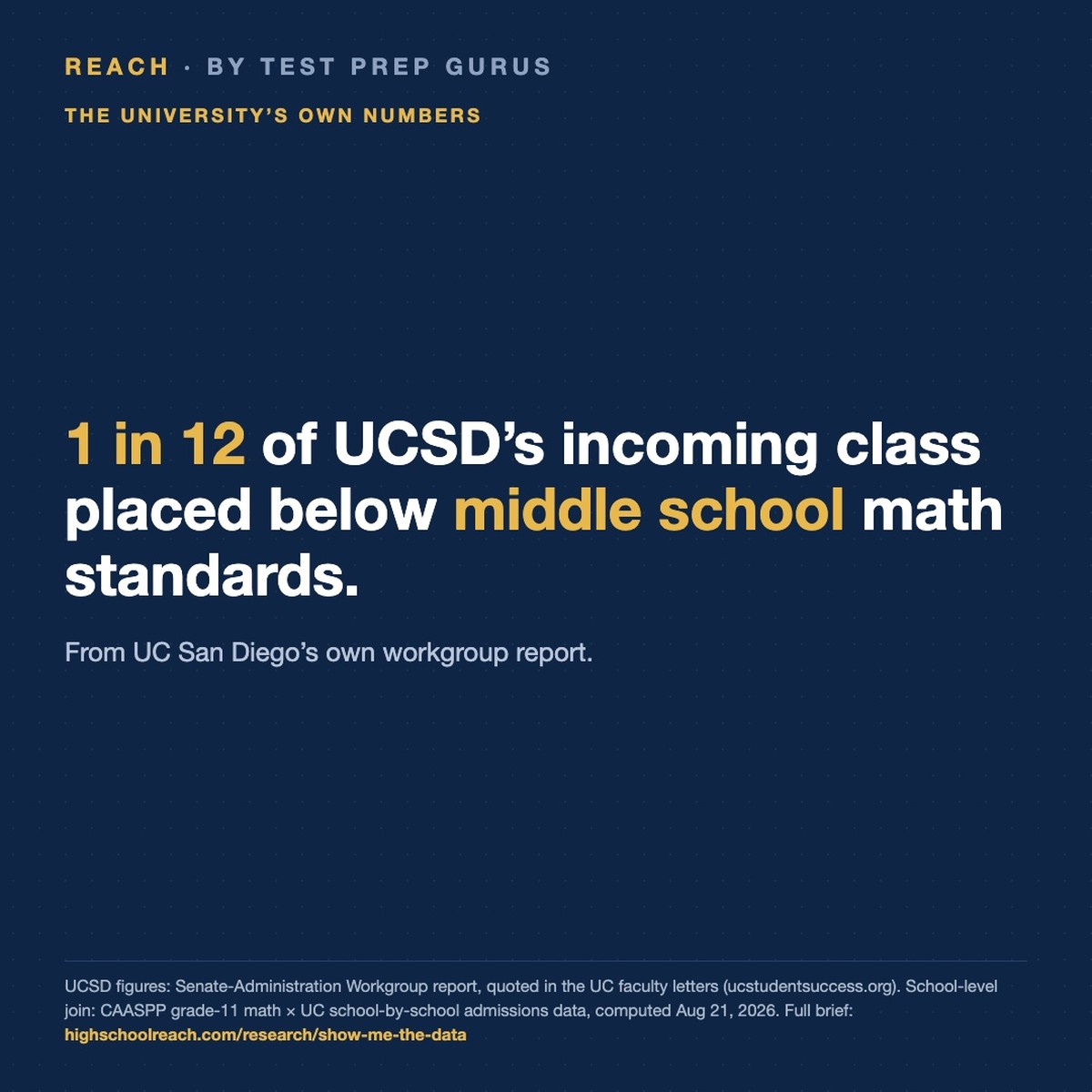
UC testing review · August 25, 2026
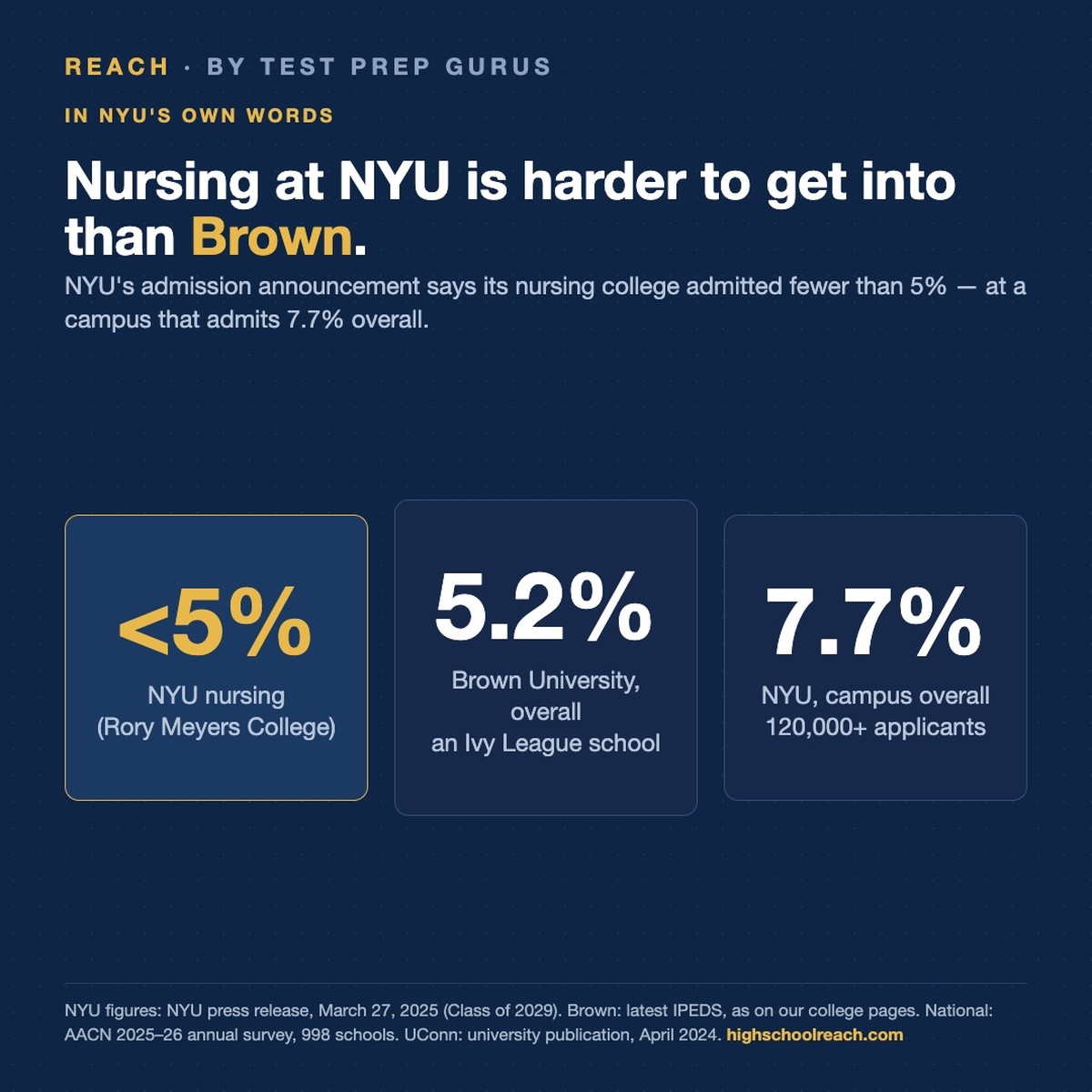
College admissions · August 21, 2026