Canyon Springs High
Moreno Valley · CA · Moreno Valley Unified · Public
Similar nearby schools
Most similar nearby schools
Moreno Valley High → John W. North High → Valley View High → Polytechnic High → Vista del Lago High → Redlands Senior High → Rancho Verde High → Ramona High →A parent's read
- 94% graduate on time. Nearly every student who starts 9th grade here finishes in four years — the strongest baseline signal a school can post.
- Course rigor in the top 18% of US high schools. 13 AP courses plus advanced math and lab-science depth — measured against every high school in the country, not just the neighborhood.
Composed from this page's data — every claim is backed by a number in the sections below.
At a glance
- 13 AP courses offered — Elite
- Dual-enrollment program (college credit while in HS)
- Gifted & talented program
- 23 calculus classes · 7 physics · 20 chemistry
- AP rigor: 82nd percentile nationally
- SAT/ACT participation: Bottom 12% by test-taker volume
- 4-yr grad rate: 94% in 2019 (69th percentile nationally)
Composed from federal CRDC offerings, EDFacts graduation data, and other public data. Full breakdowns below.
How Canyon Springs High compares for families
Stronger-than-average college-prep profile.
- ▸ StatewideAP rigor in the top 18% nationally with 13 AP courses.
- ▸ LocallyCA trails the US average on NAEP 8th-grade math (−4 points). Stronger local schools matter even more.
- ▸ vs Similar SchoolsThe closest comparables nearby: Moreno Valley High, John W. North High, Valley View High and 5 more. See the sidebar to compare side-by-side.
For Parents
Get alerts when Canyon Springs High's numbers change
New admissions results, enrollment shifts, test scores — a few alerts a year, no spam. Your email also saves your list across devices.
Objective, government-grade data — no school pays us for placement.
Academic rigor
AP + advanced-course offerings
Elite — exceptional AP + advanced course breadth
82nd percentile nationally
Gifted/talented program
Source: federal Civil Rights Data Collection (CRDC 2020-21). CRDC reports what's offered + enrolled — it doesn't collect AP exam pass rates (College Board owns that data and doesn't release it school-level).
SAT / ACT participation
CRDC federal data · 2020-21Bottom 12% by test-taker volume
Source: federal Civil Rights Data Collection (CRDC 2020-21). Volume — not score — is what's reported here. A higher count means more students at this school are entering the college admissions pipeline. Note: 2020-21 was COVID-disrupted; some districts (especially those that stayed remote longer) report unusually low or zero takers.
4-year graduation rate · federal EDFacts
What % of students graduate on time?
69th percentile nationally
Source: federal EDFacts ACGR (Adjusted Cohort Graduation Rate), 2019 vintage via Urban Institute. EDFacts publishes a range (low-high) to preserve privacy on small cohorts; we display the midpoint.
Teacher workforce · federal CRDC
Teacher experience & reliability
Source: federal Civil Rights Data Collection (CRDC 2017-18 — the most recent vintage that publishes per-school teacher quality fields; the 2020-21 sweep had them suppressed). "Inexperienced" = teachers in their first or second year. "Chronic absence" = teachers absent 10+ days/year.
Federal Title I context
High-poverty school
Title I Schoolwide eligible
≥75% of students qualify for free/reduced lunch. These schools qualify for the highest tier of federal Title I funding and typically receive extra wraparound services. Academic outcomes vary widely — check the state assessment + grad-rate tiles.
Source: NCES Common Core of Data, free/reduced-price lunch eligibility. The actual Title I designation is a district decision and may differ from eligibility — but the federal eligibility math is what we show here. We don't claim to assert whether the district formally chose to enroll this school in Title I.
Counselor capacity
Source: U.S. Department of Education, Civil Rights Data Collection 2020-2021. Counselor ratio = the school's most recent total enrollment ÷ counselor FTE. The American School Counselor Association (ASCA) recommends a 250:1 maximum; the US national median across schools with on-staff counselors is roughly 430:1.
Enrollment trend & projection
Total enrollment + grade 12, NCES Common Core of Data (2021–2024).
If the recent trend holds…
At its recent rate of +0.0%/year, projecting from 2024's 2,251 students:
An extrapolation of the recent trajectory, not a forecast of the school's plans; ignores one-off shocks.
Revenue upside
At $17,327 per student in district revenue, the 4 students projected to be gained by 2029 represent ≈ $69,308/year in additional funding.
District total revenue ÷ enrollment, NCES F-33. Public funding largely follows enrollment, so a shrinking class is a recurring budget hit.
Most similar nearby high schools
The schools most like this one — same type, blended on distance and size — and where their enrollment is heading. These are the schools families here weigh against each other.
| School | Type | Miles | HS enrollment | Trend |
|---|---|---|---|---|
| Moreno Valley High Moreno Valley |
Public | 2.6 | 2,103 | -4.8% |
| John W. North High Riverside |
Public | 5.2 | 2,011 | -9.7% |
| Valley View High Moreno Valley |
Public | 4.3 | 2,699 | -7.3% |
| Polytechnic High Riverside |
Public | 6.4 | 2,484 | +0.6% |
| Vista del Lago High Moreno Valley |
Public | 5.2 | 1,924 | -5.1% |
| Redlands Senior High Redlands |
Public | 8.1 | 2,189 | -2.0% |
| Rancho Verde High Moreno Valley |
Public | 7.7 | 2,101 | +8.9% |
| Ramona High Riverside |
Public | 9.1 | 2,142 | +3.1% |
Related reading
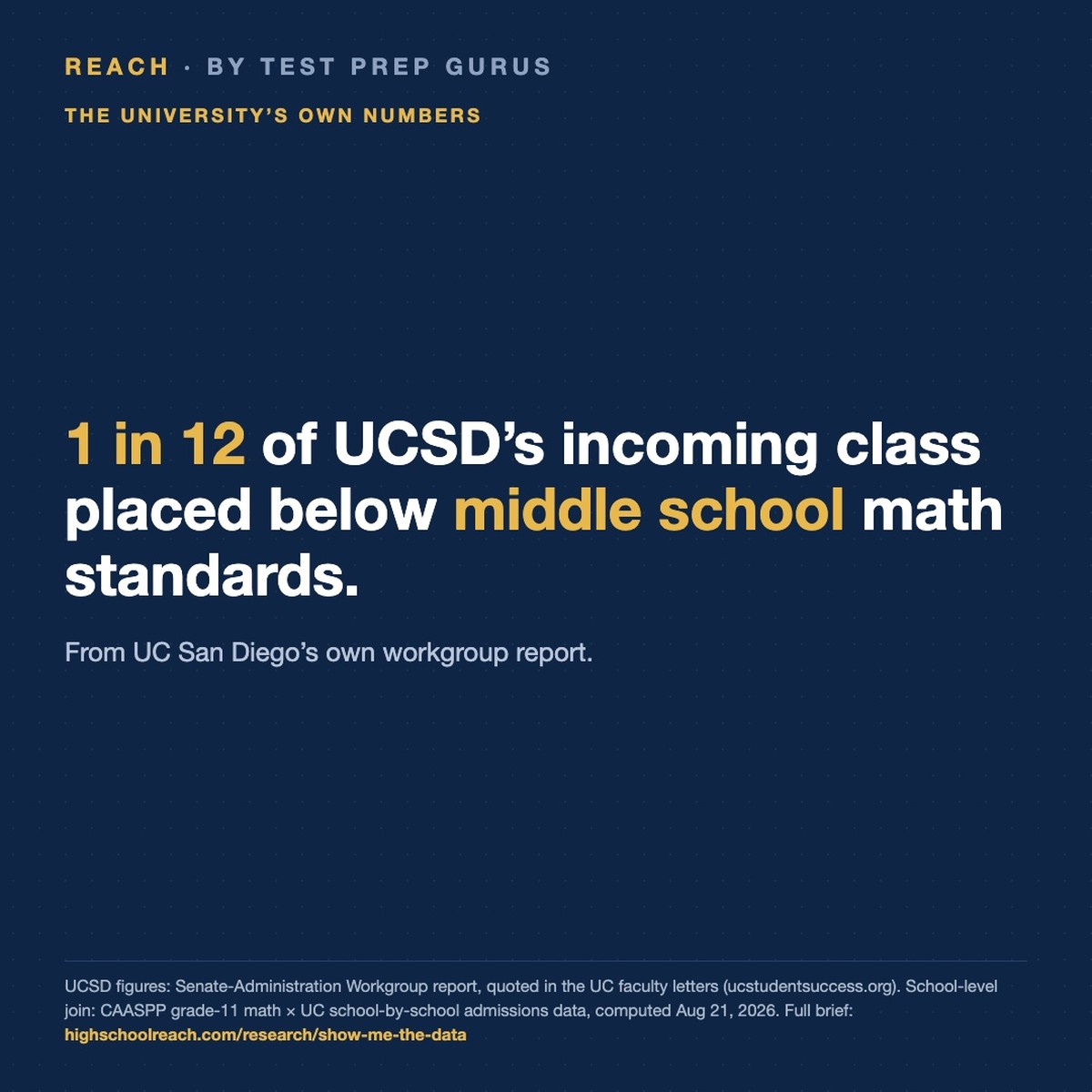
UC testing review · August 25, 2026
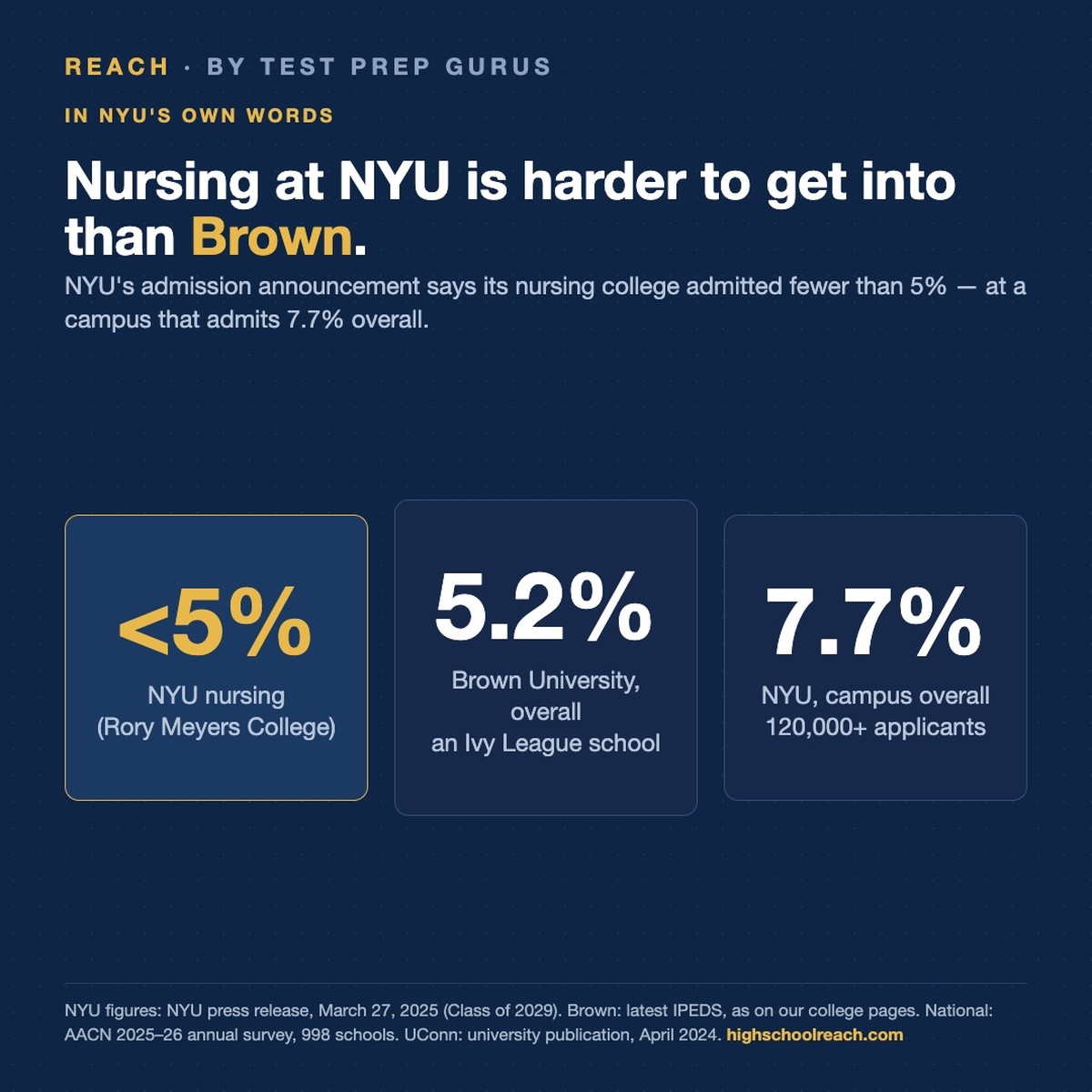
College admissions · August 21, 2026